

Healthy cOPING SKILLS - part 2
Dear clients,
The term “coping” refers to a person’s ability to manage difficult situations in life. When we say a person is coping, we imply that they maintain a certain level of physical and emotional well-being despite their challenges.
Coping skills describe certain behaviors that will help restore a person's overall well-being by reducing the impact of the negative event on their body, mind and spirit.
The term "healthy coping skills" refers to skills that build you up as a person and enable you to function optimally without any negative consequences. Healthy coping skills will make you feel better about yourself and the situation while you are doing it AND after you've done it. It results in hopefulness and the belief that you might overcome the issue.
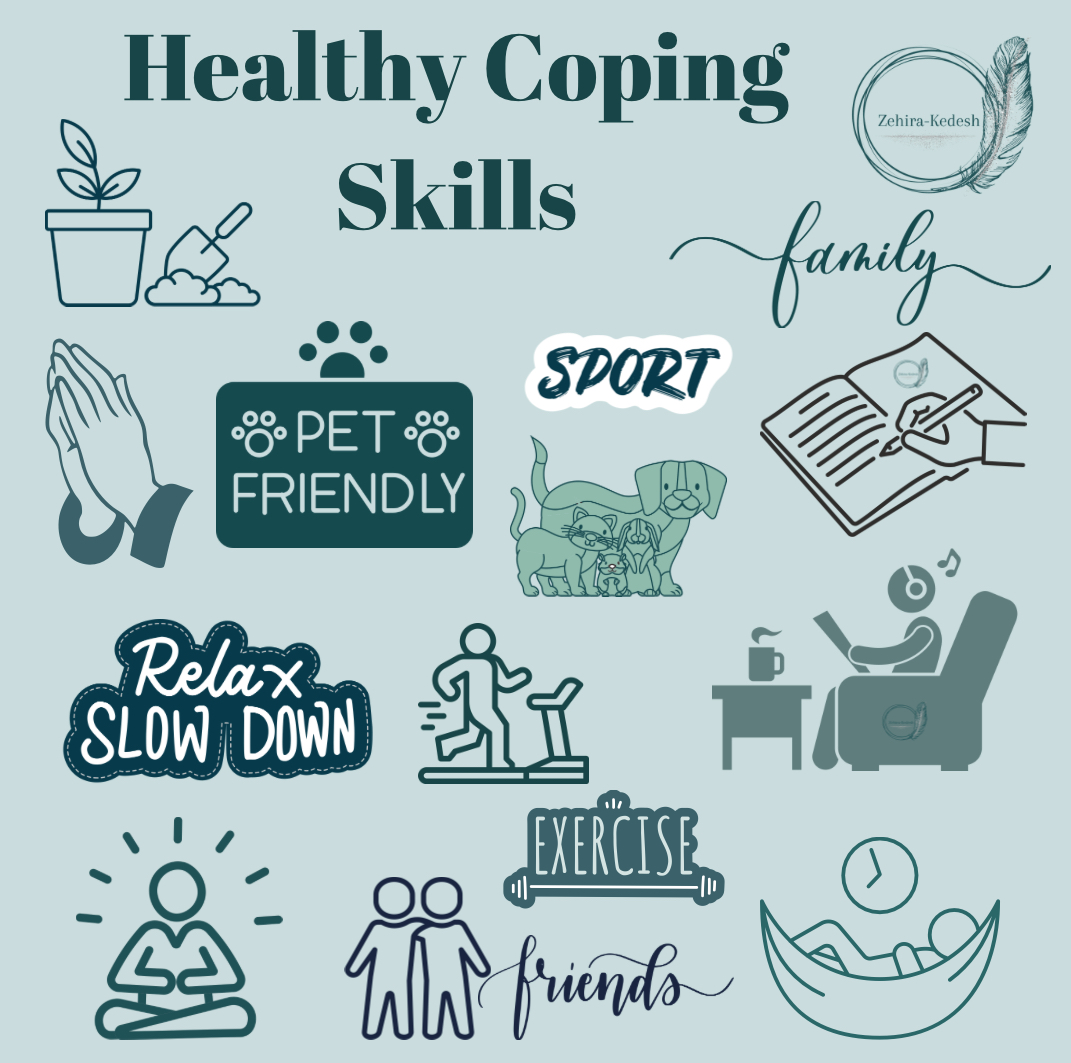
Here are some examples of healthy coping skills:
1) Friends. Spending time with friends is beneficial for various reasons including stress relief, maintaining social cohesion, and obtaining support from people who know you best. In some cases, friends can offer a fresh perspective regarding the situation and can offer a more objective view of the problem. Friends can also offer unique insights about problem-solving.
2) Reading.; Like music, reading offers a way of escape without requiring you to go anywhere. Open a book and you will become mentally transported to a different time, place, or even universe. You become absorbed in someone else's story and struggles and it is easy to forget about your own. Although this can also offer benefits in terms of broadening your knowledge and reducing stress, the type of books you read will influence your trauma recovery.
3) Exercise. Exercise is a great way to navigate stress and offers physical and emotional benefits. On a physical level, it can increase your strength, energy levels and emotional benefits. On an emotional level, exercise can help you to let go of emotions such as anger, stress, negativity and anxiety
4) Deep Breathing. This is the "go to" therapeutic technique when it comes to mindfulness and relaxation. When you take deep breaths it sends much needed oxygen to your brain and calms your mind in the process. It boosts energy levels, reduces stress levels, lowers your blood pressure and heart rate etc. Therefore, deep breathing is considered a therapeutic technique that works on a psycho-physical (mental and physical) level
Healthy coping skills will always reduce your stress and anxiety. How you cope with a traumatic or stressful event will be based on your level of resilience, your past, your support structure, your knowledge of self, and your level of well-being before the event. There is always room to improve your coping skills and there is no shame in admitting this.
Remember: A good way to measure whether your coping skills are healthy is to ask yourself how you would feel about sharing your coping skills with other people. If you feel ashamed or embarrassed about sharing, this might be an indicator that your coping skills are unhealthy.
Be Blessed,
Madeleine