

- Madeleine
Relationship counselling Questions
- Do you find it difficult to connect with your partner on an emotional level?
- Do you struggle to trust your partner or share your feelings with your partner?
- Do you find it challenging to have a meaningful conversation with your partner?
- Do you believe that you've lost the "spark" in the relationship?
- Do you feel like all you do as a couple is argue?
- Are you struggling with any issues relating to your own or your partner's sexual behaviors?
- Are you experiencing a non-existent or unfulfilling sex life?
If you've answered "yes" to most of these questions, you may benefit from seeking relationship counselling.
Relationship Counselling at Zehira-kEDESH
We believe that relationship counselling should be a two-part system. The first being therapeutic support for both individuals and the second, therapeutic support for the couple. You cannot heal or work towards recovery when you and your partner are not meeting each other on the same level.
Couples are encouraged to seek individual therapy before meeting as couple for therapy on a regular basis. This is to ensure that both parties receive the necessary support and more importantly, feel heard and understood. Once the couple is at a stage where they enter the playing field on a more equal level, they will be reintroduced to the notion of joint couple's counselling sessions.
During their individual therapy work, the couple will be learning valuable skills related to relationship building and maintenance. This includes communication skills, coping skills, conflict resolution skills, personal insights, self-awareness, improved empathy and more.
Some Reasons why couples seek therapy
People seek couple's counselling for various reasons. Some of the main reasons will be discussed below, however if your problem is not listed here, you may benefit more from trauma counselling.
"Accidental" Discovery
You may have recently discovered something deeply shocking and perhaps even repulsing. You may have walked in on your partner masturbating or watching pornography. You may have found a secret text message or email between your partner and another lover. You may have found a secret stash of condoms, underwear that isn't yours or perhaps even evidence of betrayal on video. Perhaps you've discovered your partner wearing your underwear, spying on the neighbours or in the arms of another.
These things are deeply traumatic on its own, however it is double traumatic when the discovery is accidental. In other words, you discover evidence of betrayal rather than hearing it straight from your partner. Accidental discoveries sometimes involve other people and can occur when a friend, family member, colleague or perhaps even the affair partner, contacts you and informs you of what your partner is doing.
If any of this applies to you, please refer to the section on "Shattered - A Betrayed Partner's Journey." If you are the one whose "acting out" behaviour was just discovered, please refer to the section below on "Trapped By Invisible Chains."

Shattered - A Betrayed Partner's Journey
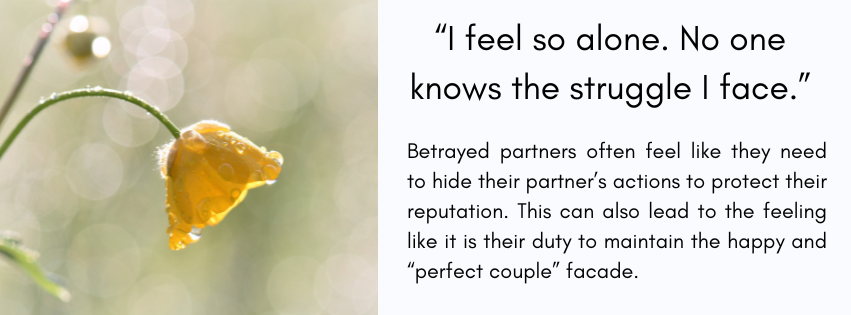
Betrayed partners often find themselves in an impossible situation after discovering the unimaginable. Your whole life and everything you believed about yourself, your partner and your relationship just crumbled to pieces. In this total state of shock, it is difficult to breathe or to stop crying, let alone think about how you should respond.
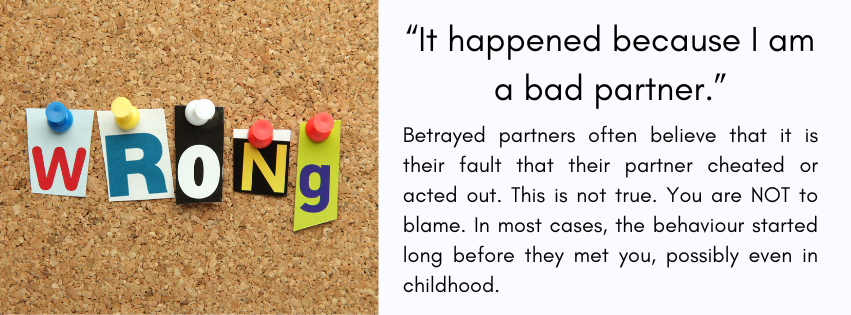
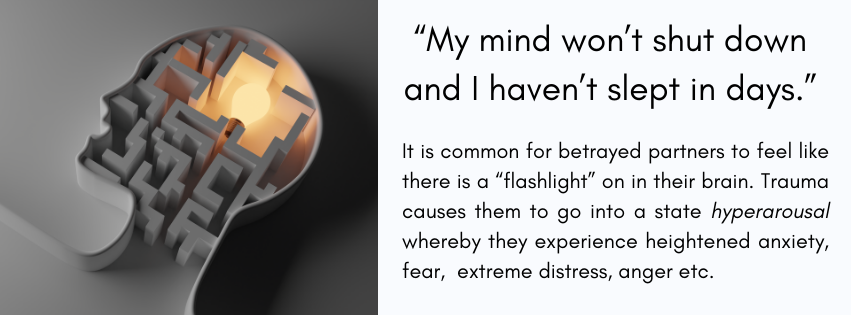
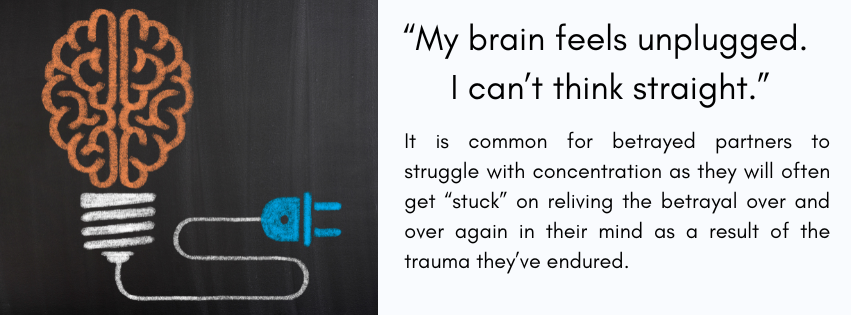
The symptoms of Betrayal Trauma closely mimic that of PTSD and it is common for partners to struggle with aspects like the inability to sleep, eat or think clearly. Partners can also experience other signs and symptoms of trauma and without adequate support, betrayal trauma could lead to secondary conditions such as depression and anxiety. Partners often experience tremendous anger, flashbacks and struggle with intrusive thoughts regarding to the discovery. In many cases, they may also struggle with recurring thoughts of "what is wrong with me and why was I not enough?"
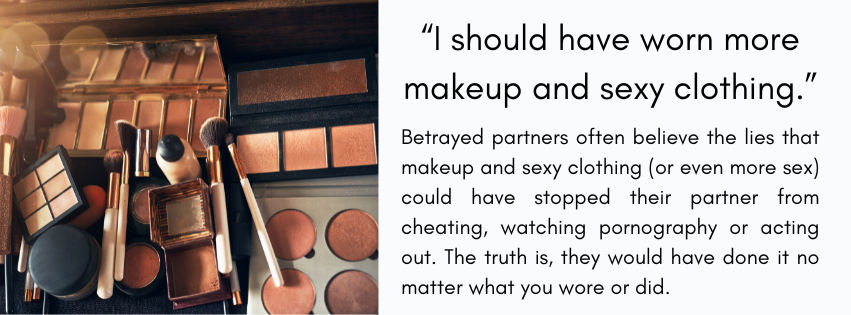
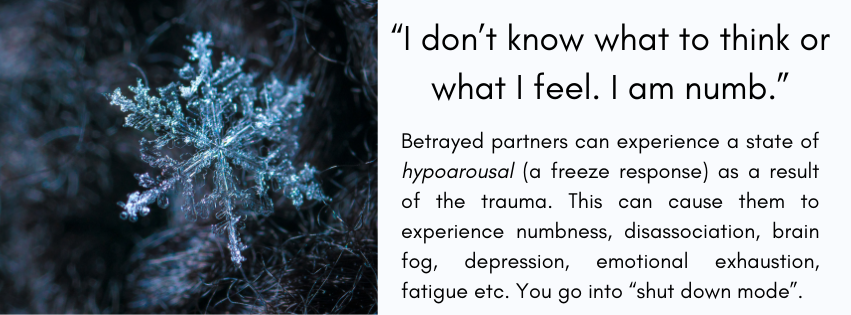
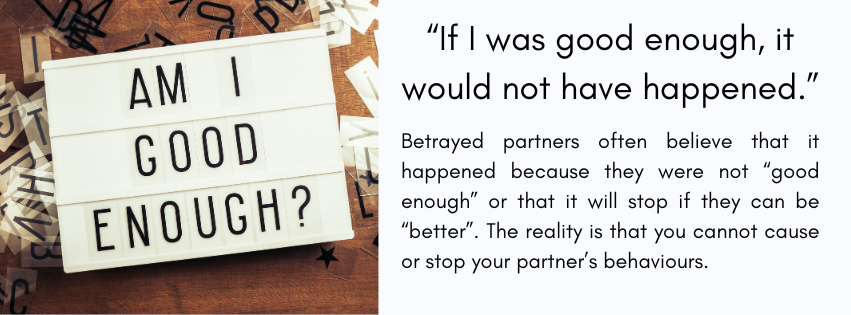

Counseling is not to "fix" what is wrong with you, rather it is to facilitate healing for what was done to you.
You are not to blame for what happened and will need help in developing coping skills, learning how to trust yourself again and understanding how the trauma impacted you. You will also need help in managing the impact of the trauma and can greatly benefit from both peer and professional support.
Your partner's "acting out" relating to sexual behaviours were there before you met and is linked to their own past. It has NOTHING to do with you and it is NOT your fault. Nothing you do or did can cause or trigger it. You are NOT to blame.
Should you require more information or referrals to support groups, please contact us now.

Trapped by Invisible Chains
People who struggle with uncontrollable sexual urges, behaviours or thoughts may also struggle with something called "Sex Addiction." A person with sex addiction may find themselves preoccupied with the idea of preparing for or fantasizing about a sexual activity or behaviour. They may feel unable to "switch off" these aspects of themselves and may find it increasingly difficult to connect with their partner.
Not everyone who engages in the following behaviours are sex addicts, however the following are all indicators of potential pitfalls: watching pornography or having an OnlyFans subscription, voyeurism, masturbation, fetishes, paying for sex, cross-dressing for sexual arousal, using sex toys, multiple instances of infidelity, going to strip clubs etc. These aspects can all have a negative impact on your relationship with your partner and other people. In severe cases, they may also lead to physical, psychological, legal and financial ramifications.
Sexual thoughts, urges and behaviours are problematic when it negatively impairs your ability to function optimally or when it interferes with your ability to maintain healthy relationships with other people. People with sex addiction are not always "sexed crazed" in their own marriages or relationships and in many cases, they can be sexually anorexic. For example, you may find it easy to be sexual with other people, but when it comes to your partner, you avoid sexual contact.


Certified Sex Addiction Therapists (CSAT's) undergo extensive training to assist clients in understanding the root cause of the addiction, assisting them in developing new coping skills and healthy sexual behaviors, as well as dealing with the full impact of their addiction. CSAT's also assist clients in managing issues relating to their family of origin and understanding how childhood trauma influenced their worldview, sense of self and even their sexual preferences.
Should you require more information about sex addiction or if you are concerned about your preoccupation with your sexual thoughts/behaviours, please contact us to book a CSAT Session.

There is hope
Relationships may be complicated at times due to trauma, life stressors and different belief systems, yet the bond between people can withstand this when all involved are working towards the same mutual goal. Even if your relationship does not survive, healing is possible after trauma.